OUR PROCESS
All our garments are completely handmade. The manufacturing process consists of the following steps:
WEAVING
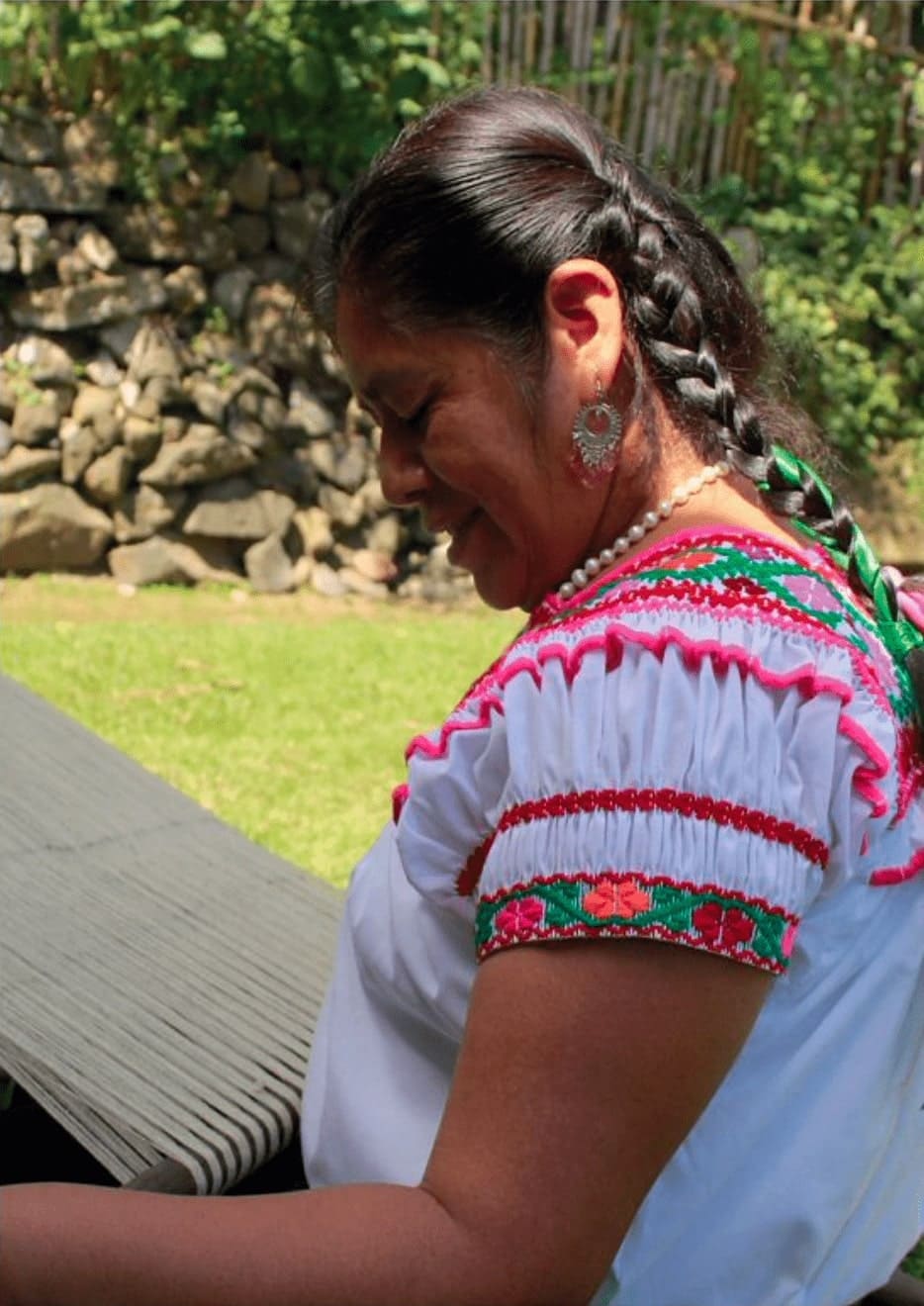
At this stage, a backstrap loom which is composed of three thick logs, two components called “machetes”, two thin logs and a bamboo stem is employed. As for the thick logs, one is held by the craftswoman, another is generally fastened to a tree, which must be very resistant because the force applied to the yarns should be very large, and the latter is used to hold the fabric being woven. Regarding the “machetes”, these are used to define the necessary crosses as well as to separate the yarns to be able to introduce the weft. Furthermore, one of the thin logs allows to hold one layer of yarns and to create the crosses for the introduction of the weft. The other thin log is used to hold the weft and easily pass it between the yarns. Lastly, the bamboo stem allows defining the wide of the fabric being woven; therefore, choosing a stem of appropriate size is a crucial task.
END TYING
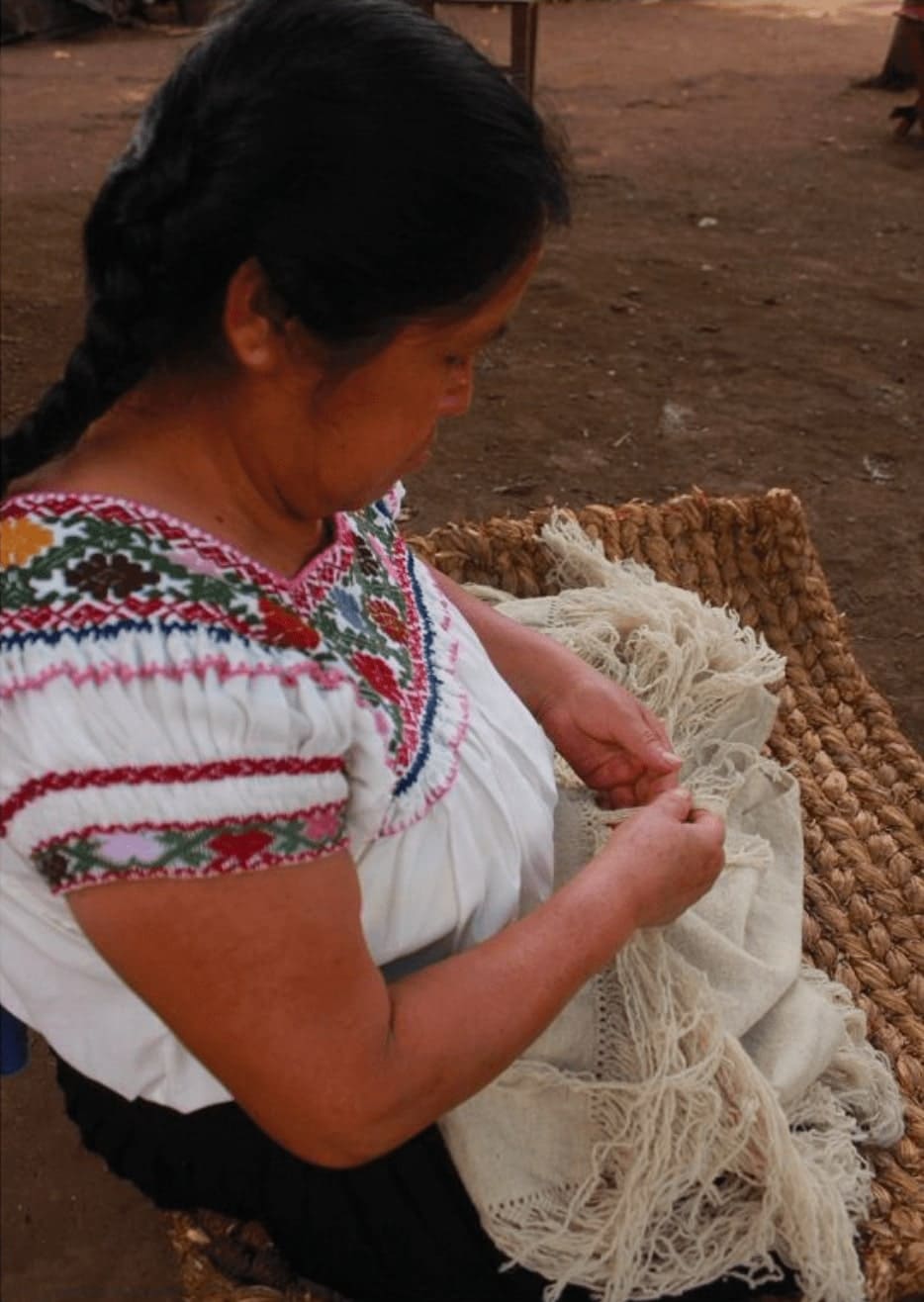
Some of the garments made in the municipality of Hueyapan have fringes, which are intertwined with macramé knots to form four types of figures:
Triangles, which represent the hills that surround the municipality.
Eyiocuillin, zigzag-shaped figures that represent the paths of life.
Xocotet, small diamond-shaped figures that represent the seeds of fruits.
Xochitet, small pompoms that represent flower buds.
Triangles, which represent the hills that surround the municipality.
Eyiocuillin, zigzag-shaped figures that represent the paths of life.
Xocotet, small diamond-shaped figures that represent the seeds of fruits.
Xochitet, small pompoms that represent flower buds.
DYEING
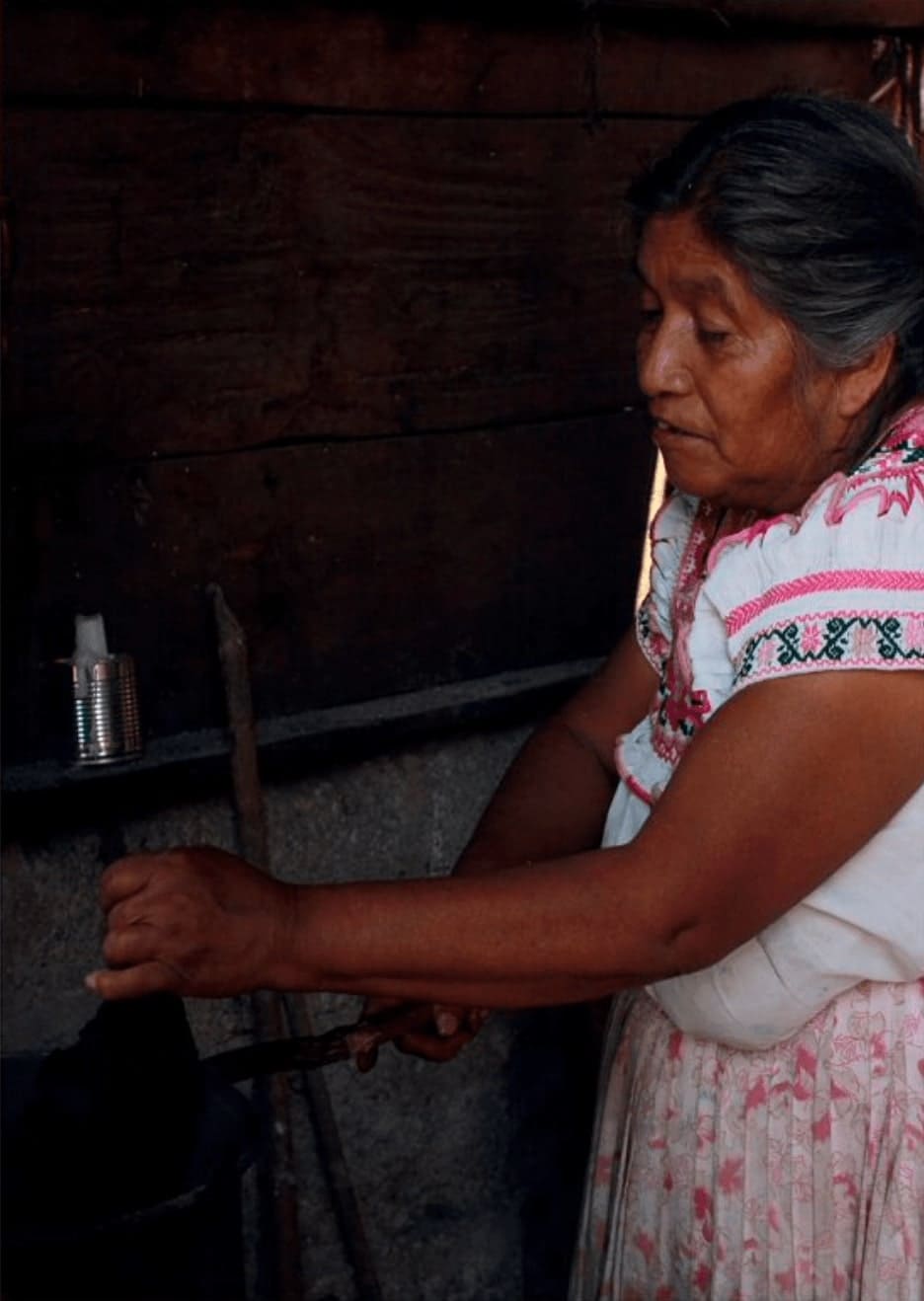
Dyeing is one of the oldest techniques applied to textiles in the municipality of Hueyapan. This requires having a wide knowledge about the great variety of plants, flowers, fruits and insectsexisting in our region because these represent the raw material for obtaining the wide variety of colors that can be appreciated in the garments.
In general, the dyeing process implemented by our artisans consists of the following steps:
1. The garment is subjected to an alkaline treatment.
2. Some alum stone is dissolved in hot water.
3. The garment is immersed into the alum stone solution and shaken constantly for about 20 minutes.
4. The garment is dried at room temperature.
5. Some powdered indigo is dissolved in a container with warm water in which the garment is immersed and constantly shaken for a period of 40 minutes.
6. After the 40-minute period, the garment is extended and drained to produce a palette of colors that range from dark blue to light blue.
In general, the dyeing process implemented by our artisans consists of the following steps:
1. The garment is subjected to an alkaline treatment.
2. Some alum stone is dissolved in hot water.
3. The garment is immersed into the alum stone solution and shaken constantly for about 20 minutes.
4. The garment is dried at room temperature.
5. Some powdered indigo is dissolved in a container with warm water in which the garment is immersed and constantly shaken for a period of 40 minutes.
6. After the 40-minute period, the garment is extended and drained to produce a palette of colors that range from dark blue to light blue.
EMBROIDERY
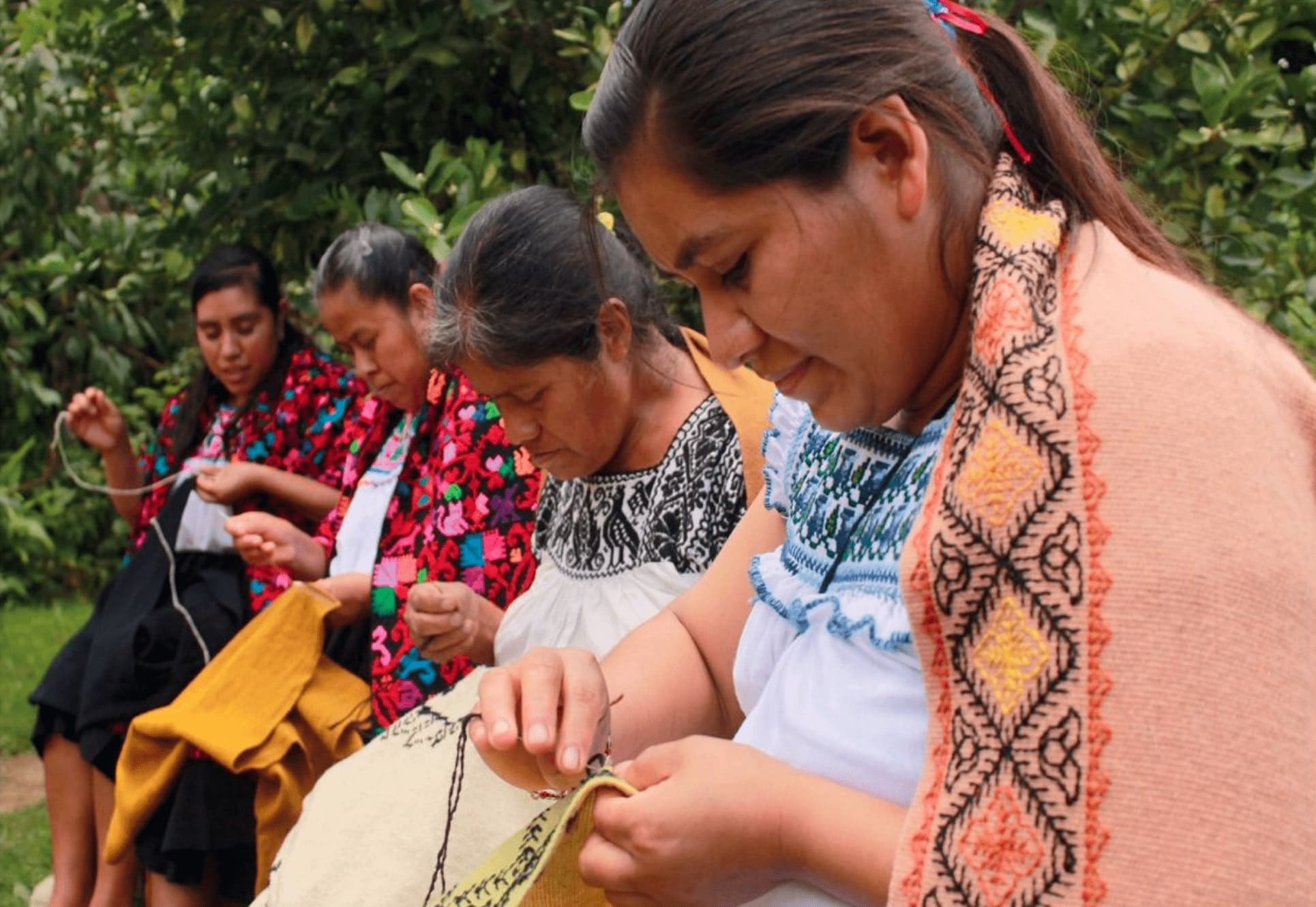
This is one of the steps of the manufacturing process that impacts visitors the most. This is because seeing our artisans embroider on very fine woolen canvases, sometimes using light colors, other times using dark colors, with great precision and dexterity, is something that attacks attention. It is important to note that there are different types of stitches such as cross-stitch, old stitch, chain stitch, fill stitch, and braid stitch, each of them with a special beauty. Regarding the iconography, the embroideries of our garments are inspired by the flora and fauna that are characteristic of the municipality of Hueyapan. Our garments depict medicinal and edible plants, endemic animals of the region, life trees, as well as corner pieces, which represent the four cardinal points.